Leo XIV is not a Legitimate Pope: An Incomplete List of His Heresies

IMAGE CREDIT: press.vatican.va

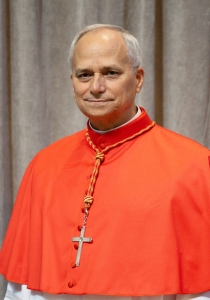
On May 8, 2025, Chicago-born Robert Francis Prevost was elected “Pope” Leo XIV by conclave. Although Prevost has yet to make any teaching as a “pope,” his past words and deeds have already made him a heretic. The Roman Catechism teaches that a heretic is no longer a member of the Catholic Church with or without formal declaration. A pope is supposed to be the visible head of the Church. Therefore, “the election of a heretic to papacy is substantially invalid.” Robert Prevost would remain a heretic and an illegitimate pope, like his predecessors Jorge Bergoglio, Joseph Ratzinger, among others, until his repentance and conversion, which we pray to soon come. Here is an incomplete list of his errors and heresies.

A “moderate”

Robert Prevost is generally viewed as a “moderate,” that he might not be as revolutionary as Jorge Bergoglio (“Pope” Francis), but he is not expected to be a man who will restore Traditional Catholicism in Rome. Such moderateness or lukewarmness is in fact condemned by God (Apoc. 3:16). God says to each and every lukewarm people that “I will begin to vomit thee out of my mouth,” meaning a lukewarm person will cease to be a member of the Body of Christ, Which is the Catholic Church. Although you might find Prevost saying something true and conservative in the past, those can only numb Catholics and seduce them into the Vatican II Church, the prophesied end-time counter-church.

Invalid ordination

Robert Prevost was ordained a “priest” on June 19, 1982. Given the date of his ordination, Prevost has likely allowed himself to be ordained in the invalid new rite of ordination, forged as a result of the heretical council of Vatican II, showing his endorsement of the invalid new rite as well as the numerous heresies of Vatican II.

An advocate of “synodal Church”

Robert Prevost once expressed his endorsement of “a synodal Church that knows how to listen to everyone.” This “synodal Church” listening to “everyone” cannot be the holy and hierarchical Church founded by Christ our Lord, Which teaches that certain people (e.g. women) should “keep silence” (1 Corinthians 14:34). It is therefore not the Catholic Church being endorsed by Prevost, but an end-time mockery of the Holy Mother Church.

This list of heresies, albeit incomplete, is sufficient to exclude Robert Francis Prevost from the Holy Catholic Church. It is regrettable and expectable that, with all our prayers, the “Papal” Conclave of 2025 has yet again failed to validly elect a legitimate pope.

Update on May 18, 2025: Further proof that Leo XIV is not a legitimate pope
One-Time
Monthly
Yearly

Like this post? Haus Jakob is free to use, but we could use your help!

Like this post? Haus Jakob is free to use, but we could use your help!

Like this post? Haus Jakob is free to use, but we could use your help!

The precept of the Church exhorts us Catholics to contribute to the support of our Pastors. Your donations sustain the pastoral mission of Haus Jakob to spread the beauty and Truth of Traditional Catholicism in Mainland China and empower us to create more content like this.

Please consider making a donation, and as long as you did it to one of His least brethren, you did it to the Lord (Mt. 25:40).

You may choose an amount

A$5.00
A$20.00
A$100.00
A$5.00
A$20.00
A$100.00
A$50.00
A$200.00
A$1,000.00

Or enter a custom amount

A$

Thank you so much for your generosity!

Thank you so much for your generosity!

Thank you so much for your generosity!

DonateDonate monthlyDonate yearly

2 responses to “Leo XIV is not a Legitimate Pope: An Incomplete List of His Heresies”

  1. Hi – you’re way, way off about Prevost

    You say they conclave “failed to elect a Pope”

    The “conclave” … CANNOT under any circumstances elect a Pope … because there are

    no Catholic Cardinals to elect anyone.

    I FULLY prove this on my site here > http://www.Gods-Catholic-Dogma.com/section_13.6.html

    *You* are clearly in heresy against the … *automatic* excommunication Dogma for heresy *and*

    *automatic* excommunication for physical participation in a heretic cult … like vatican-2 (founded in 1965)

    Dogmas here, automatic excommunication for heresy > http://www.Gods-Catholic-Dogma.com/section_13.2.html

    Excommunication for participating in v-2 heresy > http://www.Gods-Catholic-Dogma.com/section_13.2.2.html

    For *YOU* to enter the Catholic Church to have some chance of saving your soul … it’s

    the four steps here > http://www.Gods-Catholic-Dogma.com/section_2.1.html

    The vatican-2 heresy … DOES NOT HAVE … bishops or priests proven on … Sections 12, 12-B, and 12-C

    Like

  2. The Vulgate and Lutheran Bible translations so disgusting – eat shit and die – “translations”. What a pathetic joke. Werewolves, Vampires, and Frankenstein … follow with the cowardly lion, down the Yellow Brick Road – Oh my! Following Cults of Personality only produce Mao, Stalin, Hitler and Pol Pot like – dumbasses.

    John Calvin and Martin Luther, pivotal figures in the Protestant Reformation, each contributing significantly to the movement in distinct ways. Martin Luther (1483-1546), best known for his “95 Theses,” which he famously nailed to the door of the Wittenberg Castle Church in 1517. This document criticized the Catholic Church’s practices, particularly the sale of indulgences, and called for reform.

    His theology emphasized the doctrine of justification by faith alone, arguing that salvation is a gift from God and cannot be earned through good works or church rituals. Asserting that salvation is a gift from God, this theology day and night different from Torah common law as expressed through T’NaCH prophetic mussar common law and Talmudic halachic judicial common law. This prioritization of faith as the pursuit of judicial justice – fair compensation of damages inflicted by Jews upon other Jews, radically different from the theologies spewed forth by the Protestant Reformation.

    Luther made an utterly sophomoric translation the Bible into German, which utterly failed and even compounded the Vulgate perversion of the T’NaCH. Luther’s translation became “The Word” for the ignorant Lutheran laity. He promoted the idea that individuals could interpret scripture without knowledge of Hebrew or Aramaic and despised the Roman clergy who relied upon Latin and Greek. Luther’s ideas established Lutheranism, and challenged the authority of the Pope and the Catholic Church, leading to the formation of various Protestant denominations.

    John Calvin (1509-1564), Calvin built upon Luther’s ideas but introduced a more systematic theology. His work, “Institutes of the Christian Religion,” laid out his beliefs about predestination, the sovereignty of God, and the nature of the church. He established Geneva as a center of Protestantism, implementing a theocratic government that enforced moral discipline and promoted education and social welfare. Calvin’s teachings led to the development of Reformed theology, influencing various Protestant groups, including the Presbyterians and the Huguenots. He stressed the importance of a disciplined Christian community and the role of the church in guiding believers’ lives.

    The St. Bartholomew’s Day Massacre in 1572; the Huguenots were French Protestants influenced by John Calvin’s teachings. Tensions between the Catholic majority and the Protestant minority led to a series of civil wars known as the French Wars of Religion. The St. Bartholomew’s Day Massacre was a turning point, where thousands of Huguenots were killed in Paris and across France, marking a significant moment of barbaric religious violence. This period was characterized by political intrigue, shifting alliances, and brutal conflicts, ultimately leading to the Edict of Nantes in 1598, which granted limited religious freedoms to the Huguenots. However, this tolerance was revoked in 1685, leading to further persecution and the exodus of many Huguenots from France.

    The immediate trigger for the Thirty Years’ War came in 1618 with the Defenestration of Prague, where Protestant nobles in Bohemia revolted against the Catholic Habsburg rule. This event marked the beginning of the war, but the underlying tensions had been building since the formation of the Catholic League and Protestant Union. The events of 1609, particularly the formation of the Catholic League under Maximilian of Bavaria, were crucial in setting the stage for the Thirty Years’ War. The conflict would evolve into a complex struggle involving various European powers, driven by both religious and political motivations, leading to widespread devastation across the continent.

    The Protestant Union, established in 1608, was indeed led by Frederick IV, the Elector Palatine, and aimed to protect the rights and interests of Protestant states against Catholic encroachments. This was a response to the increasing tensions and conflicts arising from the Reformation and the subsequent political landscape in Europe.

    In reaction to the Protestant Union, the Catholic League was formed in 1609, primarily to counter the influence of Protestant states and to protect Catholic interests. This military alliance included several Catholic states and was a significant factor in the lead-up to the Thirty Years’ War, which began in 1618. These alliances were crucial in shaping the religious and political dynamics of the time, leading to significant conflicts and changes in power within the Holy Roman Empire and beyond.

    The Peace of Westphalia in 1648, which ended the Thirty Years’ War, was primarily focused on resolving the conflicts arising from that war rather than directly addressing the earlier events of the St. Bartholomew’s Day Massacre. The Peace of Westphalia consisted of a series of treaties that concluded the Thirty Years’ War (1618-1648) and the Eighty Years’ War (1568-1648) between Spain and the Dutch Republic. It marked a significant turning point in European history, establishing a new order based on state sovereignty.

    The Peace of Westphalia and the ensuing treaties recognized the coexistence of Catholicism, Lutheranism, and Calvinism within the Holy Roman Empire. This was a crucial step towards religious tolerance, as it aimed to stabilize the region by allowing various Christian denominations to coexist. The treaties recognized the coexistence of Catholicism, Lutheranism, and Calvinism within the Holy Roman Empire. France gained territories in Alsace and parts of Lorraine, while Sweden gained influence in northern Germany.

    While the Peace of Westphalia did not directly address the St. Bartholomew’s Day Massacre, it did contribute to a broader context of religious tolerance and the recognition of Protestant rights in Europe. The massacre had already highlighted the violent tensions between Catholics and Protestants in France, leading to a long period of civil strife. The St. Bartholomew’s Day Massacre (1572) deepened the divide between Catholics and Protestants in France, leading to further civil wars and conflicts. It exemplified the extreme violence and intolerance that characterized the period.

    In the same year as the ‘Peace of Westphalia’ (1648), witnessed the barbaric explosion of the Khmelnytsky Uprising, also known as the Cossack-Polish War. Bohdan Khmelnytsky was the leader (1648-57) of the Zaporozhian Cossacks who organized a rebellion against Polish rule in Ukraine that ultimately led to the transfer of the Ukrainian lands east of the Dnieper River from Polish to Russian control. His barbarian Cossack hordes slaughtered perhaps 1 million Jews living in the Ukraine and Poland.

    Germany annexed Prussia from Poland during the partitions of Poland, which occurred in three stages. (1772) – Prussia gained the region of West Prussia, which included parts of Polish territory. (1793) – Prussia acquired additional territories, including parts of Greater Poland. (1795) – Prussia annexed the remaining parts of Poland, including areas that would later be known as Prussian Poland.

    After World War II, the Allies did not restore Poland to its pre-partition borders; instead, they established new borders based on the outcomes of the war and the decisions made at conferences among the Allied powers. Poland lost significant territory in the east to the Soviet Union, including areas such as Lviv (Lwów) and parts of what is now western Ukraine and Belarus. In compensation, Poland was granted territory in the west, including parts of former German territories such as Silesia, Pomerania, and the southern part of East Prussia. Poland was re-established as a sovereign state after the war, but its borders were significantly different from those before the partitions in the late 18th century.

    Goyim superficially read “their” bible abominations of Av tumah avoda zarah. But continuously, from generation to generation, and Age from Age, they fail to learn and apply the rebuke given to them by their own God! JeZeus said: “By their fruits, you shall know them”. Reactionary Xtians read their bible trash translations oblivious to this fundamental rebuke. Its not the Nicene Creed theologies etc or Luther or Calvin theologies that determine their faith, rather its their barbaric Yatzir Ha’Rah to pursue violence and judicial injustice which testifies to the bankrupsy of every Xtian theology starting with that of Paul and JeZeus. Xtian Av tuma avoda zara just as crude and utterly devoid of humanity as the ancient Babylonian, and Greek and Roman empires which this NT theology replace those cultures and customs practiced by peoples from earlier times.

    Bottom line … no belief in JeZeus in any theology, creed, or dogma can atone for the Shoah and the generational crimes which led up to the Shoah. Belief in JeZeus, regardless of Xtian or Koran theologies decrees those believers an eternal fire in Hell. Xtian parents should cast their bible abominations to the flame of Hell before permitting this Av tuma avoda zarah to infect the souls of their children.

    Like

Leave a reply to mosckerr Cancel reply